CASE STUDIES

What It Took to Get Built

Seven projects where the hard part was never the engineering — and how managing the people around them kept the work moving.

Louisville Bridges

2016 · 01 of 07
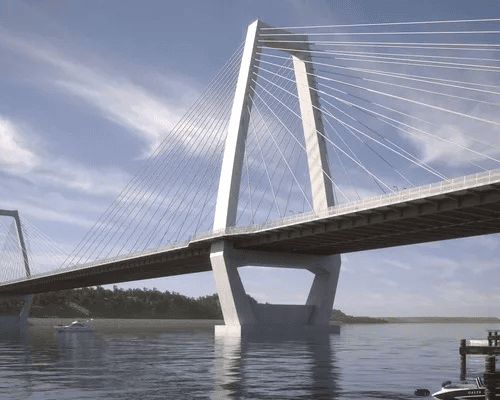
Rendering of a cable-stayed bridge over the Ohio River, its twin concrete towers and white stay cables seen from the water

Situation

Louisville had spent more than 60 years trying to complete a major transportation corridor connecting the metro area to Southern Indiana. The project faced intense political opposition because the proposed bridge would pass through one of the city's wealthiest neighborhoods. Opponents were highly organized, well-funded, and had successfully shaped public perception against the project.

Response

While working for the Kentucky Transportation Cabinet (KYTC), we developed a comprehensive stakeholder engagement strategy. This included mapping key stakeholders, building a statewide contractor database, conducting listening sessions, and launching a door-to-door outreach campaign to establish trust at the neighborhood level. These efforts were supported by traditional and social media initiatives focused on addressing misinformation and communicating project benefits.

Outcome

KYTC secured approval to construct the twin bridges and complete the corridor. Although opposition groups continued public campaigns against the project, their arguments lost traction as residents recognized the long-term economic and transportation benefits. By engaging underserved communities and incorporating their priorities, including commitments to local job opportunities, we broadened support and helped build a more inclusive coalition behind the project.
Norton — Hospital

2024 · 02 of 07
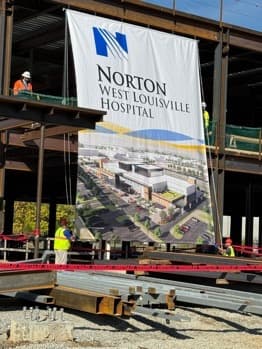
A Norton West Louisville Hospital banner hung from the steel frame of the hospital under construction, with workers in safety vests on the deck around it

Situation

Norton Healthcare's decision to build a new hospital at 29th and Broadway represented a historic investment in West Louisville, becoming the first hospital west of 9th Street in more than 150 years. The project generated tremendous interest across the city because it brought significant healthcare access, jobs, and economic investment to a community that had long felt overlooked. Norton also understood that tensions could arise due to concerns surrounding the selected general contractor, which had previously experienced challenges working with local and small contractors on another high-profile project in the same area. Given the visibility of the project and the community's expectations, Norton recognized the importance of creating a transparent and inclusive process from the outset.

Response

Norton Healthcare engaged 7PM Group to lead community engagement and contractor outreach efforts. Beginning six months before groundbreaking, we conducted educational workshops and informational meetings for community leaders, local businesses, and contractors to explain how companies could successfully participate in the project. We established a single point of contact to ensure clear and consistent communication throughout construction and served as an active liaison between the general contractor and local subcontractors, helping resolve issues before they affected project momentum or community confidence.

Outcome

The hospital was completed on time and within budget while achieving nearly 40% participation by local and small contractors, a benchmark for projects of this scale in Louisville. Through proactive stakeholder engagement and ongoing issue resolution, potential conflicts were addressed before escalating into public disputes. The project not only delivered a transformative healthcare facility but also demonstrated how intentional community engagement can build trust, create economic opportunity, and successfully navigate the complexities of a highly visible development project.

JCPS — Shawnee

2020 · 03 of 07
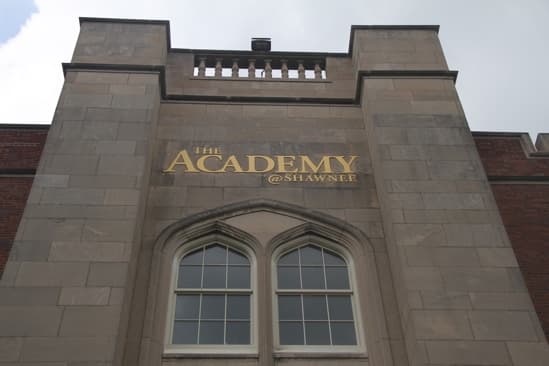
Stone facade of The Academy @ Shawnee, gold lettering above two arched Gothic windows, seen from below against an overcast sky

Situation

Jefferson County Public Schools (JCPS) faced growing public criticism over the lack of minority- and women-owned business participation in both construction and procurement contracts. As the district launched a multi-year capital improvement program to renovate and build schools across the region, it faced a significant challenge: many minority and women-owned firms no longer responded to bid opportunities due to years of limited engagement and unsuccessful outreach. The issue had become highly visible, creating both reputational and operational risks for the district.

Response

7PM was engaged to help rebuild trust and increase contractor participation. We developed a vetted database of minority- and women-owned businesses throughout Kentucky and worked closely with business assistance organizations to better understand contractor concerns, capacity, and availability. Through direct outreach and relationship-building, we met with contractors individually to address past frustrations and encourage participation in JCPS procurement and construction opportunities. We also helped ensure pre-bid meetings became productive forums for engagement rather than procedural requirements.

Outcome

When our engagement began, minority- and women-owned businesses were largely absent from JCPS pre-bid meetings, and participation rates remained well below district goals. Through sustained outreach and trust-building efforts, pre-bid meetings became consistently well attended by diverse contractors, and JCPS achieved or exceeded its participation targets of 15% minority-owned business participation and 10% women-owned business participation on construction projects. Based on the success of these efforts, 7PM was also invited to support JCPS career and technical education programs, helping connect students to opportunities in the construction trades. School leaders reported meaningful improvements in student engagement and requested ongoing support for construction-focused career pathways.

Beecher Terrace

2018 · 04 of 07
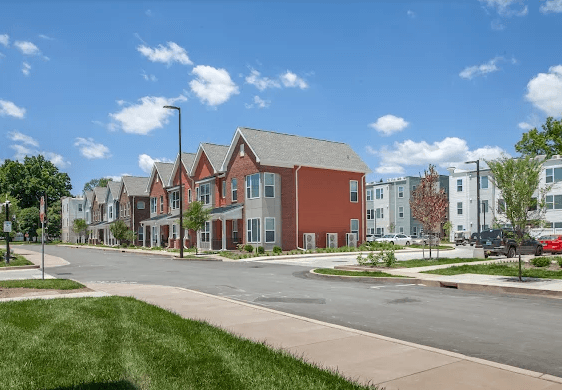
A newly built street of brick and grey townhomes with young trees and fresh sidewalks under a blue sky

Situation

Louisville was one of ten cities awarded funding to revitalize a major urban housing development. An out-of-town firm was selected to lead the project, but local residents strongly opposed the plan due to the lack of minority participation and local representation. Community protests and site blockades delayed construction for more than a year as the city struggled to reach an agreement with neighborhood leaders.

Response

7PM was engaged to develop a path forward. After reviewing project plans and meeting with both project leaders and community stakeholders, we facilitated negotiations focused on defining a meaningful community benefit. The resulting proposal included dedicating a portion of the development to local developers and requiring minority-owned businesses to be included in the project from the outset.

Outcome

The agreement enabled construction to move forward after a year-long delay. The lead contractor committed to sourcing materials from minority-owned vendors during the initial demolition phase, while the city allocated a portion of the development for local management and oversight. As a result, minority contractors participated throughout the project, local developers gained a direct role in its success, and community opposition was largely resolved.

Gray Construction — Hill's Pet Nutrition

2021 · 05 of 07
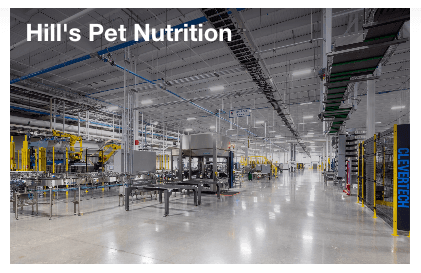
Interior of the Hill's Pet Nutrition manufacturing facility: a bright, polished production floor with stainless steel lines and yellow safety rails

Situation

Gray Construction, one of the nation's premier design-build firms, was selected to build a state-of-the-art Hill's Pet Nutrition manufacturing facility outside Kansas City. While Gray had an excellent reputation for project delivery, it was unfamiliar with the local community and the project's heightened expectations around workforce inclusion and supplier diversity. More significantly, neither Gray nor the project owners were aware that just one year earlier the surrounding area had experienced significant civil unrest and rioting tied to concerns over economic opportunity, jobs, and community investment. As plans for the multi-million-dollar facility became public, local residents were beginning to organize opposition due to fears that they would once again be excluded from the economic benefits.

Response

7PM was engaged to expand Gray's network of minority- and women-owned contractors and support its broader inclusion efforts. Through a comprehensive community assessment, we identified key stakeholders, local contractors, community influencers, and the underlying causes of the recent unrest. Our analysis revealed that many of the individuals with the greatest influence were not the public-facing leaders Gray had been advised to engage. We provided Gray and the project owners with a strategic roadmap outlining community concerns, critical relationships, and actionable steps to build trust before construction began.

Outcome

Armed with a clear understanding of the community landscape and the risks associated with the project, Gray partnered with local stakeholders to create meaningful opportunities for participation and engagement. By proactively addressing concerns before they escalated, the project avoided the opposition and unrest that many feared. The facility was successfully completed while strengthening relationships with the surrounding community and demonstrating the value of early stakeholder engagement in high-sensitivity environments. Because of the success of this effort, Gray set a new standard and stated that all future projects would require a community engagement profile.

UL HSC

2026 · 06 of 07
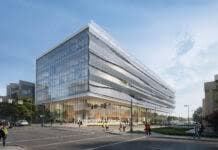
Architectural rendering of the University of Louisville Health & Science Center, a glass building with curved white floor bands, seen from the street corner

Situation

The University of Louisville launched plans for a flagship Health & Science Center (HSC), one of the largest and most visible capital projects undertaken by the institution in recent years. Located in a predominantly minority community near downtown Louisville, the project carried significant public scrutiny. At the same time, changing state policies, including House Bill 4, and a growing industry-wide decline in the utilization of local and small (L/S) businesses created additional complexity. As an urban university that relies on public trust and federal funding, UofL faced increasing pressure to demonstrate meaningful community engagement and economic inclusion while navigating legislative oversight, contractor expectations, and community concerns.

Response

The University engaged 7PM Group to help bridge the gap between the institution, the construction team, and the surrounding community. We developed and implemented an engagement strategy focused on transparency, accountability, and accessibility. This included facilitating regular meetings between the general contractor and the local contractor community, identifying barriers to participation, and recommending procurement strategies that increased opportunities for local and small businesses. Acting as a trusted intermediary, 7PM maintained open communication with community leaders, contractors, and University stakeholders to ensure concerns were addressed before they became larger issues.

Outcome

Although the project remains in Phase 1, the University has successfully established a framework for community engagement and contractor participation that aligns institutional goals with community expectations. The project has generated strong interest among local contractors, created open channels for dialogue and accountability, and reduced the risk of public conflict surrounding a highly visible investment. The engagement model developed through this effort is now viewed as a foundation for future University capital projects requiring careful navigation of community, contractor, and regulatory interests.

Metro — Louisville Metro Procurement & Contracting Task Force

September 2020 · 07 of 07
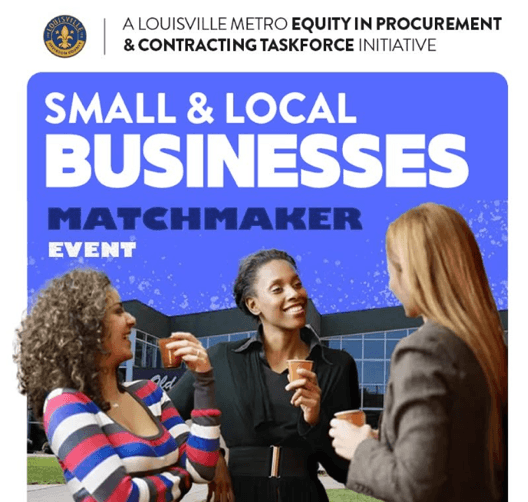
Event flyer for the Louisville Metro Equity in Procurement & Contracting Taskforce's Small & Local Businesses Matchmaker Event, showing three women talking over coffee

Situation

In the aftermath of the deaths of George Floyd and Breonna Taylor, Louisville faced significant civic unrest and growing demands for institutional accountability and economic equity. In response, the Mayor established the Equity in Procurement Task Force (which included the City of Louisville, Muhammad Ali Airport, University of Louisville, Transit Authority of River City, Metro Sewer District, The Louisville Water Company, Louisville Gas & Electric, The Louisville Metro Housing Authority, Jefferson County Public Schools, Kentucky Transportation Cabinet, and Greater Louisville Inc.), bringing together major public and private institutions to identify barriers facing small and local businesses. Despite two years of research and discussion, many community members remained skeptical as meaningful progress had yet to materialize. Recognized for its success building trust in diverse, immigrant, and underserved communities, 7PM was invited to present a community engagement strategy to city leadership and was subsequently retained to support the Task Force.

Response

7PM conducted a comprehensive assessment of the Task Force's member organizations, reviewing procurement processes, communication strategies, and upcoming contracting opportunities. We met individually with each member organization and engaged directly with small and local businesses to identify both perceived and actual barriers to participation. Based on these findings, we developed targeted engagement strategies designed to improve communication, increase accessibility, and create more meaningful pathways for local businesses to compete for contracting opportunities.

Outcome

Within months, participation in Task Force events and engagement initiatives increased significantly. New relationships were established between major institutions and the small/local business community, helping rebuild trust and confidence in the process. The engagement framework developed by 7PM helped member organizations improve outreach, strengthen pre-bid engagement, and reduce barriers to participation. As policies and administrative priorities evolved, 7PM continued to help the City of Louisville and Task Force members adapt their strategies while maintaining strong connections with the local business community. The project reinforced 7PM's core strength: bringing stakeholders together in challenging environments and transforming tension into productive collaboration.

YOUR PROJECT

Ready to add yours to this list?

Start a Conversation